
The founder had 138K followers on X and no time for interviews
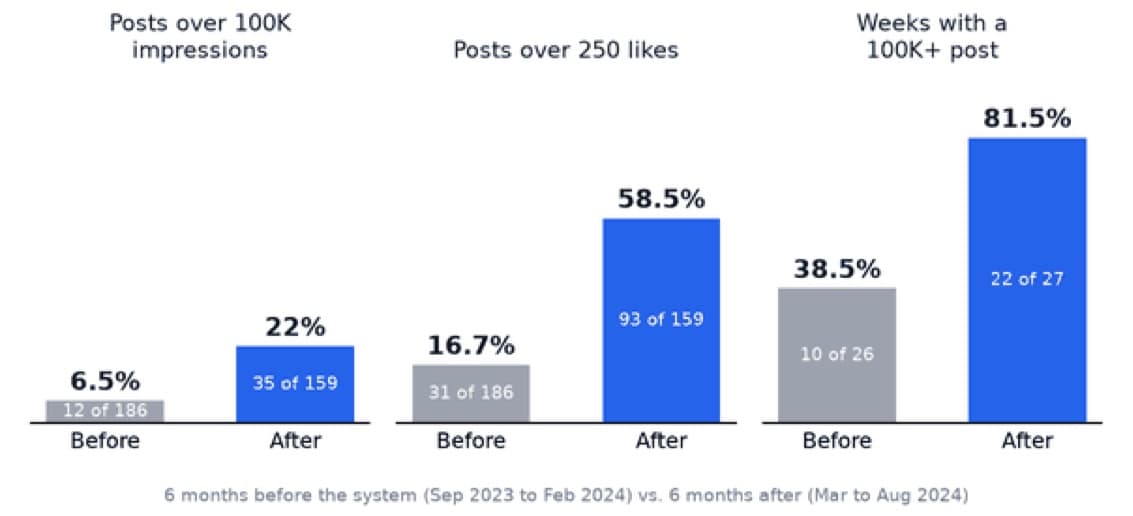
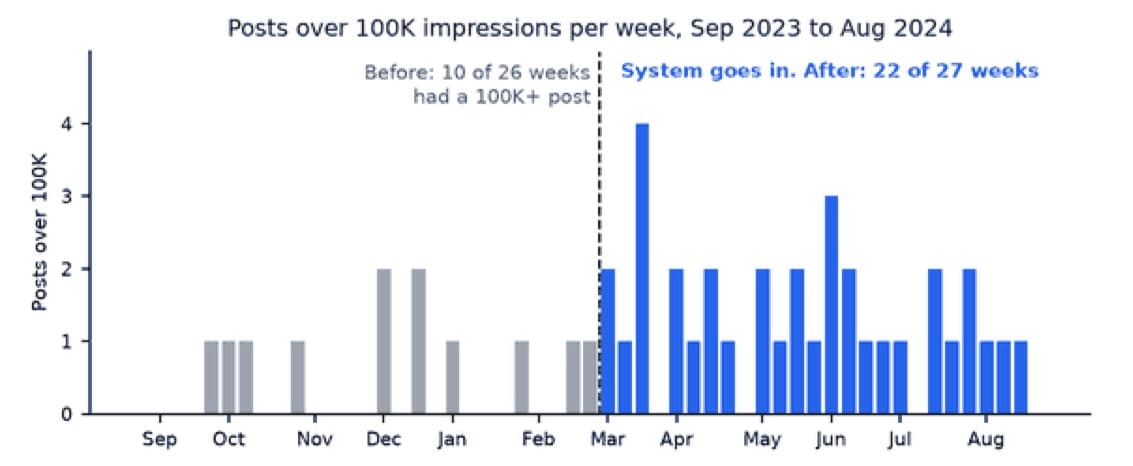
They had a book on the way and wanted X to help grow their email list. In our first 6 months, only 10 of 26 weeks had a post over 100K.
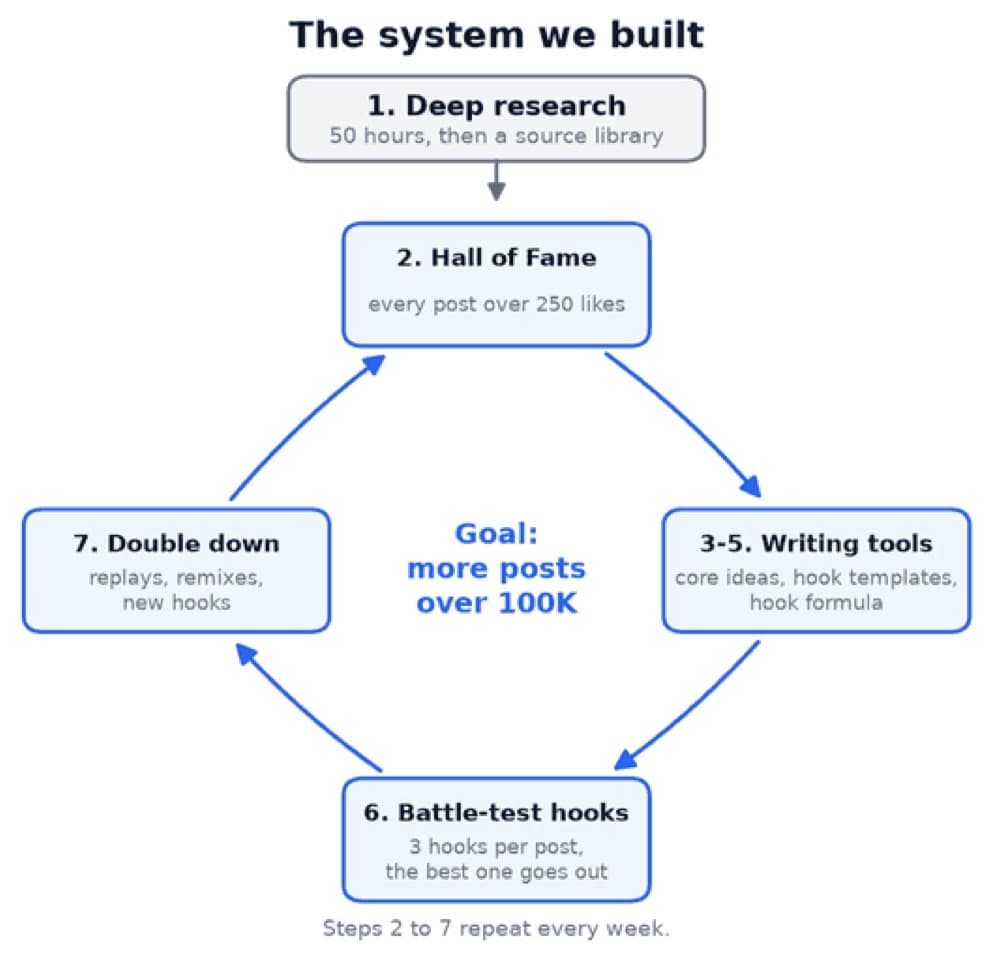
We built the system around the founder's own rule, "test, then invest"
In February 2024, we set it up to make small bets and put more behind the winners. The founder's time stayed close to zero, so research and data did the job interviews usually do.
1. We spent 50 hours researching the founder before we started
We went through Google results down to page 3, YouTube videos from over a decade ago, and the podcast interviews they'd given. We audited the newsletter too, from the signup page to the welcome email. The traffic data showed X and LinkedIn had a ton of room to grow.
That research became our source library. We took ideas that had already worked on their podcast or YouTube channel and rewrote them for X.
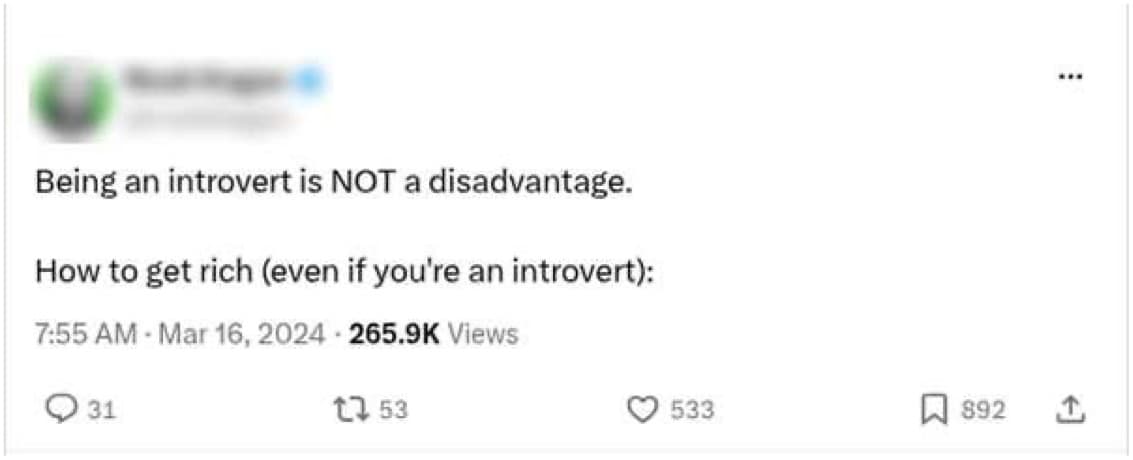
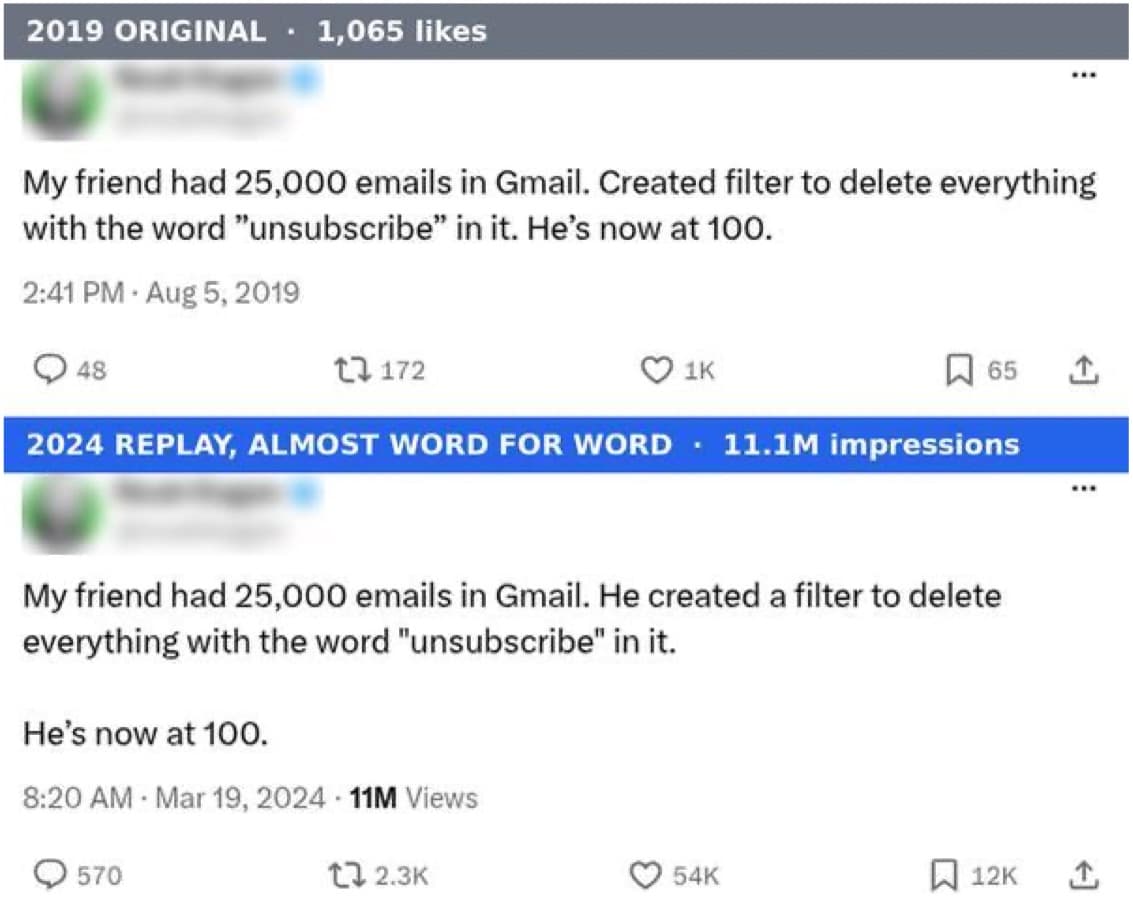
2. Our Hall of Fame turned a 2019 post into 11.1M impressions
Any post over 250 likes went into a Hall of Fame in Notion, and we tagged each one by topic. We checked it before writing anything new.
3. We wrote down the founder's core ideas, and one thread that used 4 of them did 1M impressions
We pulled out the ideas the founder had repeated for years and tagged the Hall of Fame by each one. That showed us what the audience wanted more of. The "don't quit your job" thread carried 4 of them in 10 steps and did 1,013,671 impressions.
| Core idea | Post | Impressions |
|---|---|---|
| Persistence beats resistance | "I'm the CEO of a $100 million business. But the first 10 years of my career:" | 1,610,768 |
| Don't quit your job, set a freedom number | "Please don't quit your job and 'go all in'." | 1,013,671 |
| Build wealth with your day job first | "I became a millionaire by age 30 working day jobs." | 167,358 |
4. We created hook templates from posts that were already winning
We studied the top posts on the founder's account and on accounts like James Clear's and Justin Welsh's. The structures that kept winning became templates. Each template sits next to the proven post it came from, plus a version written from the founder's own story.
| Template | Skeleton | Post | Impressions |
|---|---|---|---|
| Past vs. Present | I am [credibility]. But [concession]. Here are # [lessons]. | "I'm the CEO of a $100 million business. But I've tried (and failed) to build 10+ startups before." | 435,563 |
| Learn from my mistakes | I'm [age]. When I was young, I [mistake]. | "My #1 regret in life: I wish I had taken myself and dating more seriously in my 20s." | 1,237,527 |
| Friend story | My friend [did something surprising] | "My friend had 25,000 emails in Gmail..." | 11,097,348 |
| Step by step | [Credibility]. Here's how to [result]: | "Please don't quit your job and 'go all in'... Here's how you can do it:" | 1,013,671 |
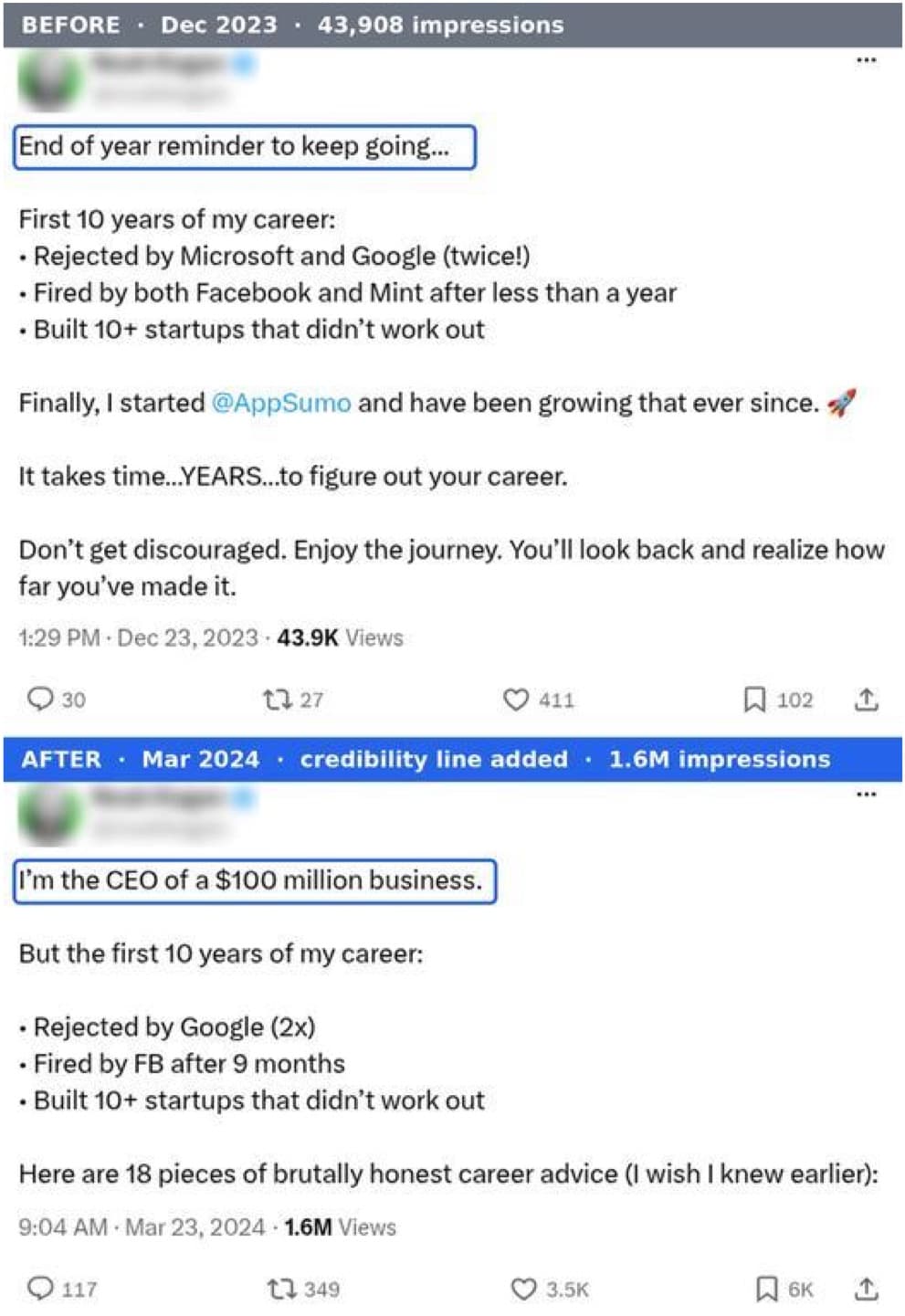
5. One credibility line helped take a career post from 43,908 to 1.6M impressions
We score every hook on this formula:
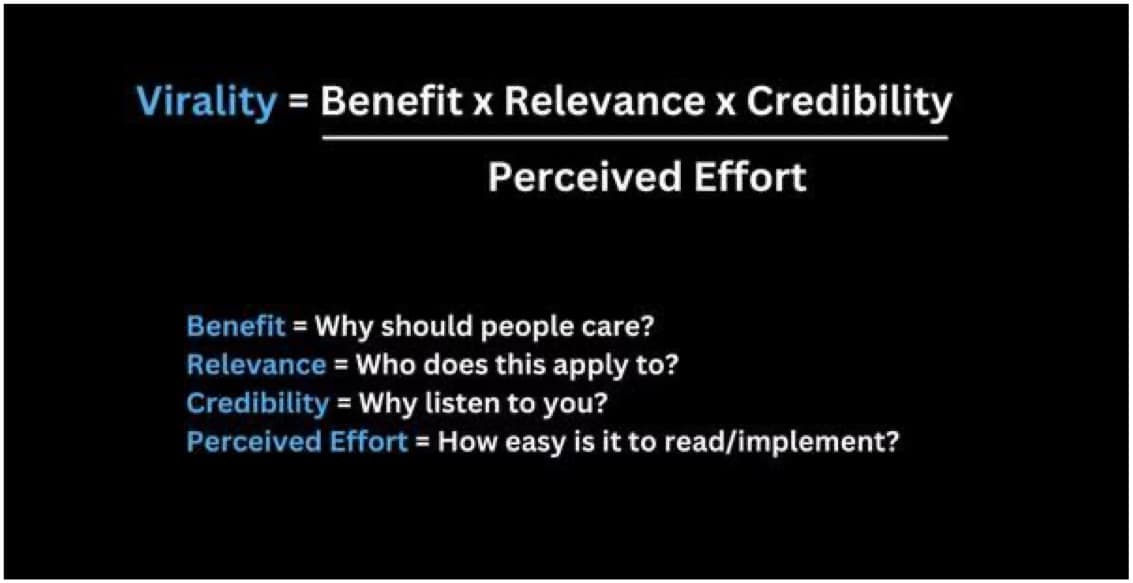
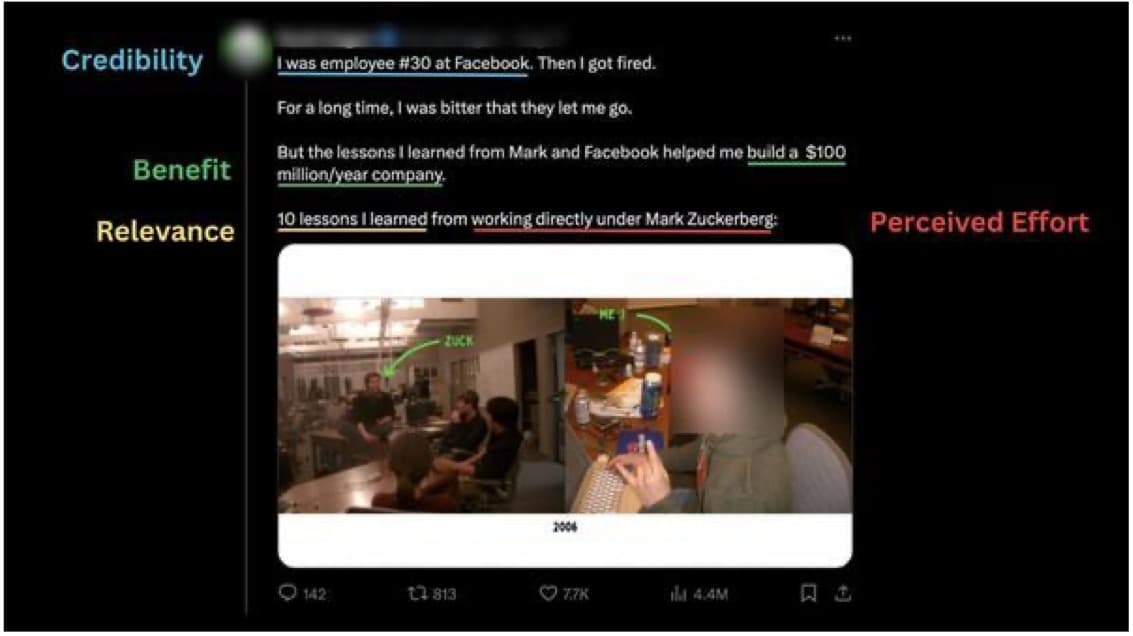
"Employee #30 at Facebook" is the credibility, "$100 million/year company" is the benefit, and "10 lessons I learned" is the relevance. Years of lessons in one post lowers the effort.
The formula told us what to fix. We posted the same career story 3 times and kept rewriting the top:
| Date | First line | Impressions |
|---|---|---|
| Dec 2023 | "End of year reminder to keep going..." | 43,908 |
| Feb 2024 | "I'm the CEO of an $80 million business. But the first 10 years of my career:" | 244,851 |
| Mar 2024 | "I'm the CEO of a $100 million business. But the first 10 years of my career:" | 1,610,768 |
In July, we reposted a 435,563-impression thread without the credibility line, and it got about half the engagement.
6. We battle-tested 3 hooks for every post after one thread flopped
In February, a thread about the company's culture handbook died. From then on, we wrote 3 first lines for every post and posted the one that scored highest on the formula.
Each hook also had to pass the Name Test from our best practices page: "If you cover your name and profile picture, can people still tell it's your writing?"
So we tied our tips to the founder's own story, like failing at 10+ startups before building a 9-figure business.
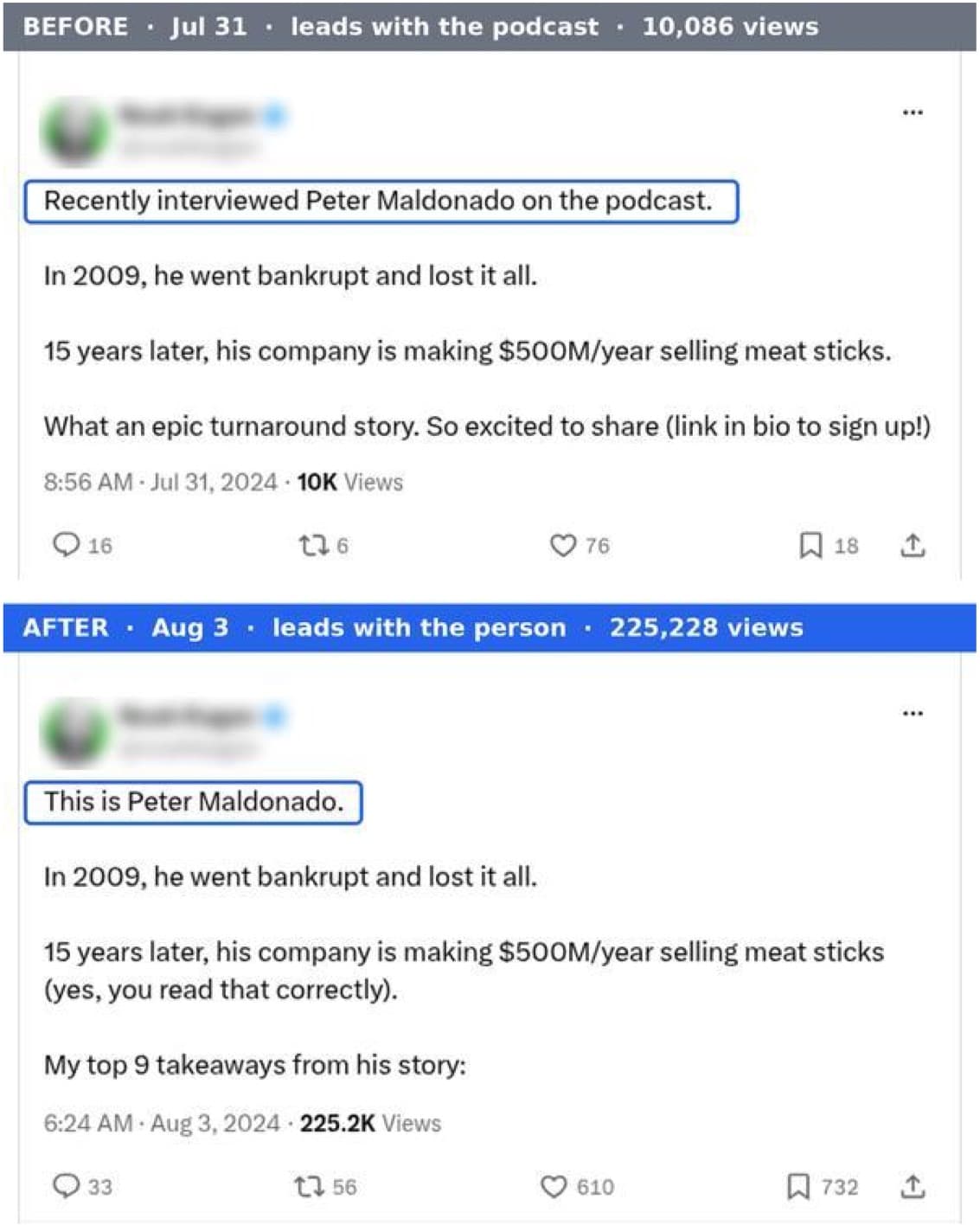
7. New hooks turned a 10,086-impression post into 225,228
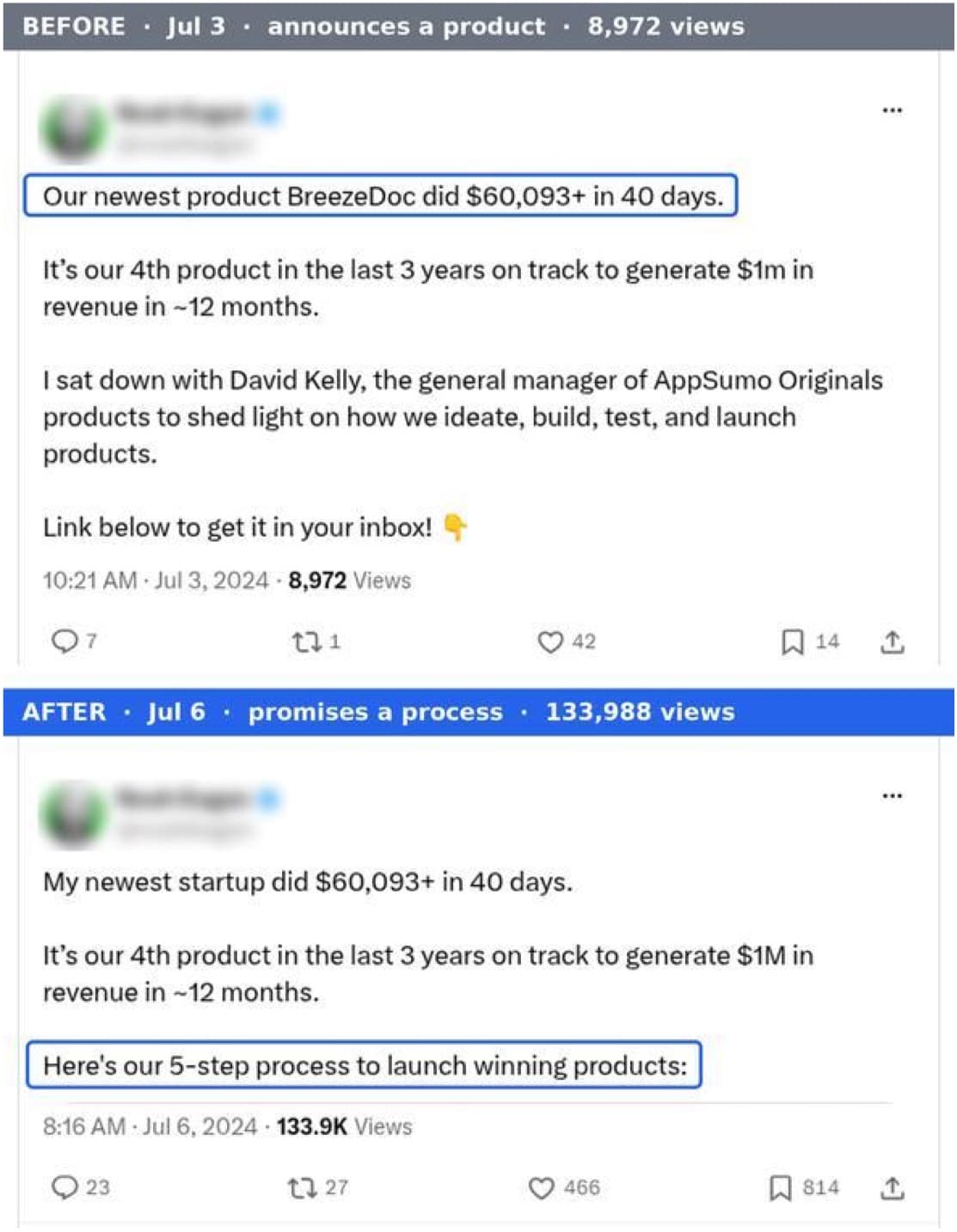
Once a post worked, we posted it again or gave it a new hook. New hooks did the most for posts that missed the first time.
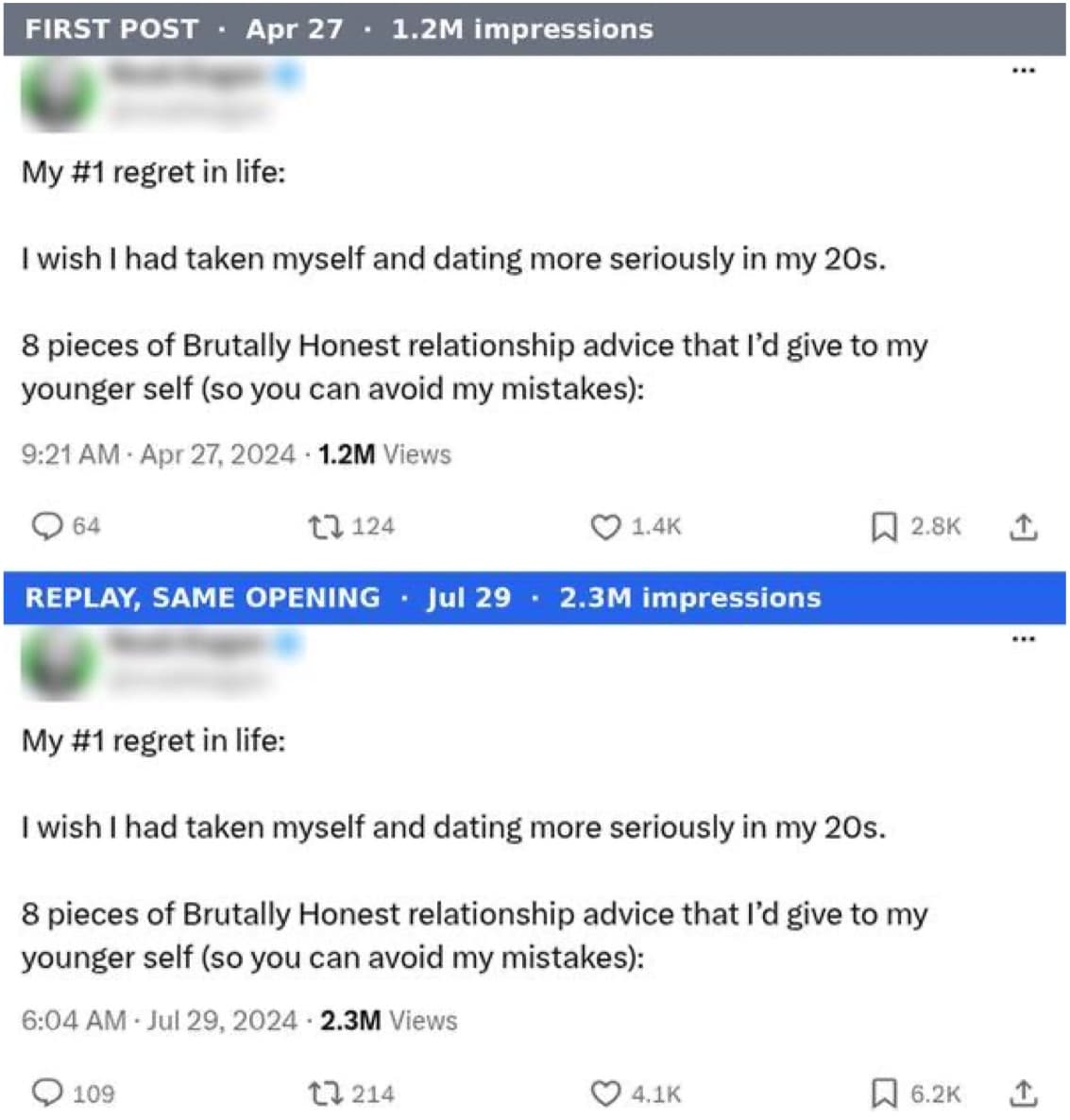
By July 2024, 2 of the top 3 posts on the account were replays.
