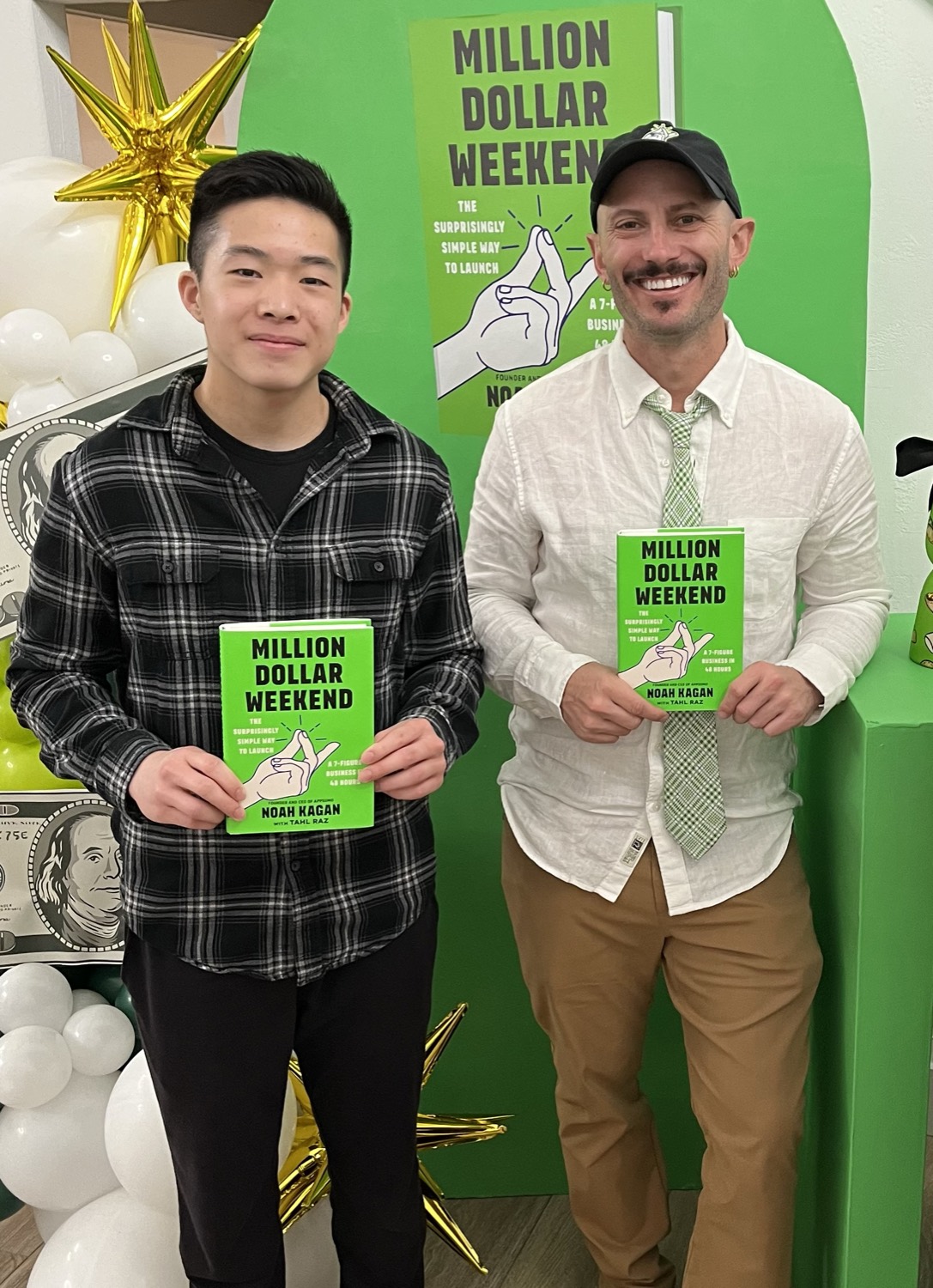
In 6 months we added 35,000 active email subscribers and 75,000 new followers across his accounts. Million Dollar Weekend became a New York Times bestseller and crossed 100,000 copies.
He was running AppSumo at the same time, so we only got about an hour of his time each week. Everything we published had to come out of that hour.
So we built a content multiplication system. A CMS is a process to take one idea and turn it into multiple pieces of content across multiple mediums.
The top creators are all prolific. They put out more good content than everyone else, and usually that's because they have a big team behind them spending six figures a month. We didn't have that.
Find the content type that works
The goal was to grow the newsletter ahead of the book launch, so we worked backwards from that into numbers we could actually track.
Then we tested a lot of different content types against it. The ones that drove the most email subscribers were Noah's personal founder stories. Working with Mark Zuckerberg, building AppSumo, career advice from someone who'd been doing this for 20 years.
Here's a post we wrote with Noah:
"I was employee number 30 at Facebook" is the credibility. "$100 million company" is the benefit. "10 lessons I learned" is the relevance, because anyone can learn from lessons. And the framing lowers the perceived effort, because it would take you years to learn those lessons on your own and here they are in one post.
Cover the name on that and you still know who wrote it. The more of your personal story and credibility you weave into your hooks, the more your content stands out, and the harder it is for anyone else to copy what you're doing.
So we stopped spreading ourselves across everything else and went where only Noah could go.
Build a Hall of Fame
Every week we ran T3B3. What were the top 3 pieces of content? What were the bottom 3? How do we double down on the ones that did well and cut what didn't?
The top 10% of everything Noah had ever posted went into a doc we called the Hall of Fame. What you rank them by depends on what you're optimizing for.
We saved the hooks separately from the posts, which matters later.
We kept a second list of Noah's core ideas, the things he actually believes. There were 17 of them. A few:
- NOW, not HOW
- Test, then invest
- Persistence beats resistance
- You only need to be right once to win
- The best marketing is a great product
- Never forget the taco (be weird, be you)
Say the same thing in a bunch of different ways
Once we had our top posts, it was about figuring out how to say the same thing in a bunch of different ways. We call this the 3Rs.
1/ Repost
We repost all of our top posts every 90 days.
People get weird about reposting. But less than half your audience saw it the first time, and the ones who did need to be reminded more than they need to be taught.
Change the hook, change the image, modify the body, and post it again.
2/ Repurpose
We'd test an idea as a tweet first. If it worked, we'd write it up as a longer post. Then Noah would record a podcast on it. We'd take the podcast, transcribe it, and write the transcript into the newsletter. The newsletter became a Twitter thread. The thread became a LinkedIn post.
Noah only had to record once a week. Everything else came out of that one recording.
Then we ran 3 CTAs around every newsletter:
- Pre-CTA the day before: "tomorrow we'll talk about X."
- CTA the day it went out: "I just talked about this."
- Post-CTA the day after: "yesterday I talked about this."
3/ Remix
Remixing is taking two things that already worked and combining them into one new post.
Every post has 2 jobs. The hook has to stop someone, and the body has to land. Most posts only do one of them well. So when you have a post where the idea landed but not many people saw it, and a hook from somewhere else that pulled a lot of people in, you put the hook on the post and both halves are already proven.
How we ran it:
- Find your outliers
- Collect your best hooks in their own file, separate from your best posts
- Put the hooks on the posts
A remix can beat both of the posts it came from.
In summary:
- Use a content waterfall approach to creating content: test angles with short form, turn into long form, then waterfall back down into short form
- Iterate to find the content type that drives the best results
- Build a hall of fame of your top posts
- Use the 3Rs to multiply your efforts